Industries
Drug & alcohol testing for trucking, fleet, and logistics employers
Line-hauls, slip-seats, dock turns, and gate rules do not pause for clinic lines. Collections should meet DOT and handbook requirements without derailing dispatch—or leaving alcohol windows to chance.
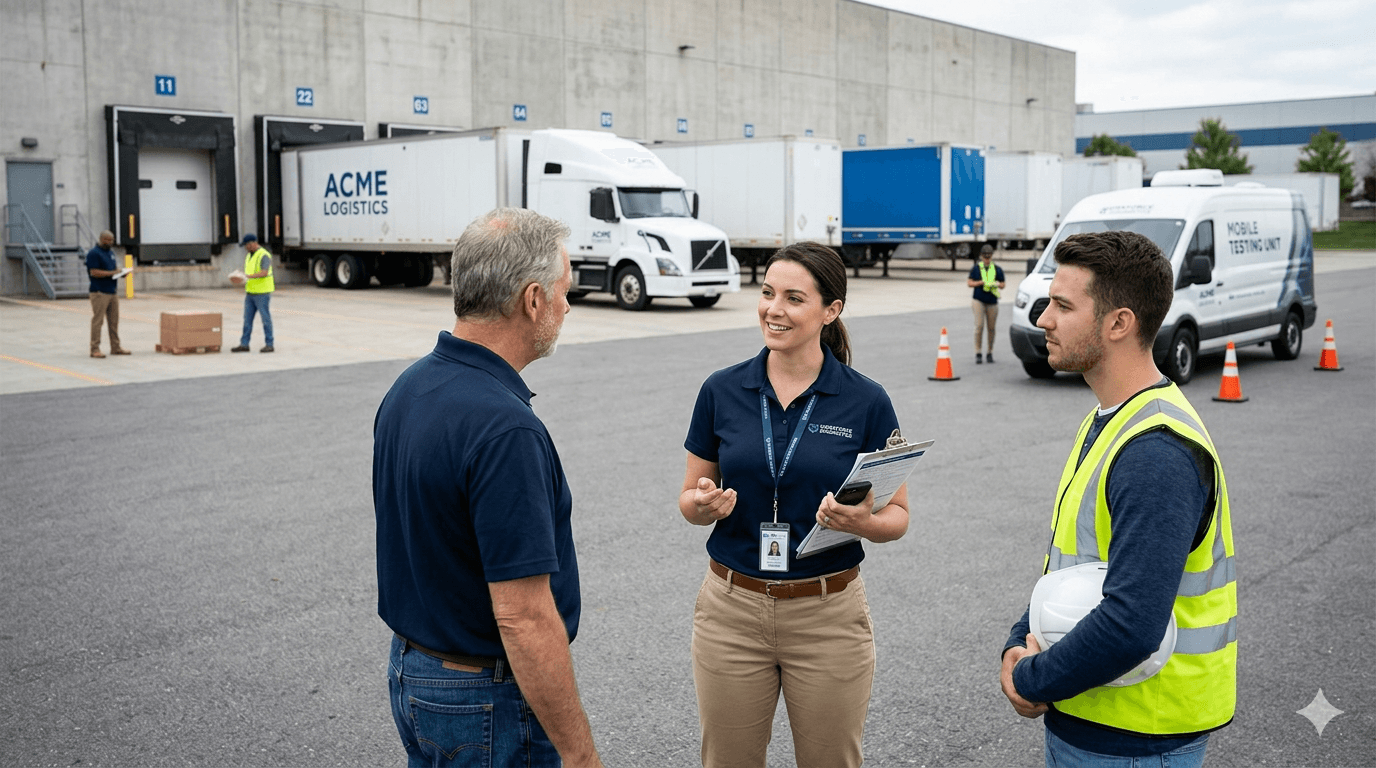
Motor carriers, dedicated fleets, brokerage operations, and warehouse-heavy logistics networks all share the same operational truth: if testing pulls people off the property for half a shift, service levels and HOS math suffer. That is why safety and operations leaders push collections to terminals, yards, cross-docks, and maintenance bases whenever policy and site conditions allow.
DOT-covered drivers and other safety-sensitive staff need the right modality, forms, and timing for each test reason—pre-employment, random, post-accident, reasonable suspicion, return-to-duty, and follow-up. Non-DOT roles in the same building—dispatch, loaders, shop staff—often run under a separate company policy, and the collector has to know which program each donor is on before paperwork starts.
We work the way your DER and third-party administrator expect: clear orders, disciplined chain of custody, and realistic ETAs when the day goes sideways.
All industries · Employer services overview · Resources & articles · Request a quote
Testing programs trucking and logistics employers rely on
DOT drug testing follows federal rules for covered employees: correct custody, panels, and documentation for your operating administration, plus alcohol testing through evidential breath workflows when the program requires it. Random testing has to hit consortium or employer pool rates without quietly missing selections because the field could not execute.
Breath alcohol testing matters after qualifying incidents and under random alcohol programs—windows are short, and supervisors need a plan before the call goes out. Post-accident and reasonable suspicion events should trigger the right drug and alcohol combination for each person, not a generic requisition.
Non-DOT warehouse, clerical, and support populations may still face pre-employment, random, or post-incident testing under your handbook. Blended sites need roster clarity so DOT and non-DOT collections never cross wires.
Why on-site and mobile collections cut downtime and confusion
When collectors meet drivers and staff at the employer location, you reduce unpaid travel, gate re-entry friction, and “where did they go?” moments during random blitzes. Supervisors stay in the loop for observation rules, escorts, and donor communication.
Multi-terminal carriers and regional 3PLs benefit from one intake pattern: site addresses, after-hours escalation, shift calendars, and how your TPA ships specimens. We align visit planning with dispatch and peak dock activity instead of treating every branch as a one-off clinic hunt.
Services that map to fleet and logistics operations
Employers in this sector typically combine DOT drug testing, breath alcohol testing where alcohol is in the program, mobile and on-site drug collections, random pool execution, and incident-driven testing. Non-DOT policy paths run alongside for staff who are not regulated.
Oral fluid drug testing may fit some non-DOT hiring or workplace programs, and DOT oral fluid options are mode- and date-specific—your DER and counsel should authorize the specimen before we dispatch.
Related program pages
Questions from this sector
- Can collectors meet drivers at the yard or terminal instead of a clinic?
- Yes, when privacy, restroom or observation needs, and site security can be met. Yard and dock-side collections are common for DOT and non-DOT programs because they keep donors near assets and supervisors.
- Do you execute random selections from our consortium or TPA?
- Yes. Send the order with donor names, program type per person, and lab routing; we complete collections and custody to those instructions. Reliable field execution is what turns pool percentages into completed tests.
- How do you support urgent post-accident or alcohol testing?
- Alcohol windows are unforgiving—share policy deadlines and whether BAT is required when you first call. We prioritize incident-driven requests, communicate ETAs, and confirm DOT versus non-DOT context so the right device and paperwork are on site.
- We run warehouses and fleet from the same campus—how do you separate DOT and non-DOT?
- With clear roster flags and orders per donor. Tell us who is regulated and which test reason applies; we use the procedures and forms for that program. Mixed sites work when HR and the DER agree on routing before collection day.
Plan yard and terminal coverage with your network in mind
Share terminal list, average headcount by site, DOT versus non-DOT split, and how your TPA or consortium issues orders. We respond with scheduling options and documentation expectations suited to fleet and logistics operations.