Services
Oral fluid drug testing for employers
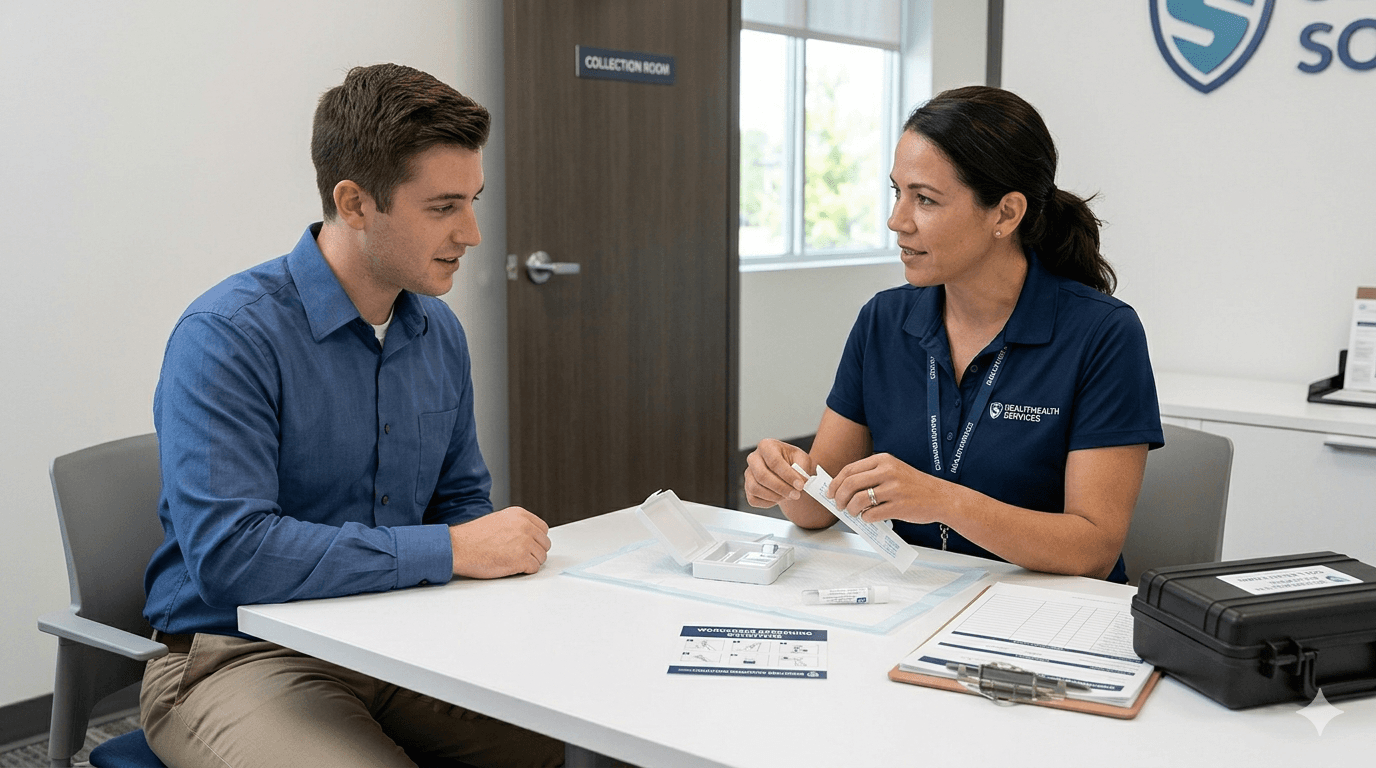
Oral fluid drug testing helps employers run observed workplace collections without restroom logistics—so scheduling, donor flow, and supervisor communication are easier to manage across offices, warehouses, hiring events, and multi-site operations.
Saliva collections still follow your authorized program and lab routing—they are not a casual swab outside policy. For field logistics see On-site & mobile drug testing; for policy-led programs see Non-DOT drug testing; for regulated staff see DOT drug testing and DOT vs non-DOT drug testing.
Most teams adopt oral fluid because the business problem is logistical: observation without sending every donor through restroom coordination, calmer conversations in a private office or break room, and faster batching at hiring events or shift changes.
Non-DOT workplace oral fluid testing is common after counsel and your TPA align handbook language, candidate notices, and lab menus. For DOT-covered employees, oral fluid drug testing is only allowed where federal rules and your operating administration authorize it today—DOT oral fluid rules keep evolving, so confirm current authorization and approved workflows with your DER and compliance advisors before changing specimen type.
We provide on-site oral fluid testing and mobile oral fluid collections when your program lists saliva on the order, your site can host quiet staging, and interruptions stay under control.
Why employers switch to oral fluid drug testing
Switching is usually an operations decision first: fewer moving parts on collection day, less downtime, and a workplace observation process that feels more predictable to HR and donors.
Easier observed collections at a table or station—without restroom logistics.
Simpler on-site staging for branch offices, plants, and warehouse operations.
Smoother hiring events and batched new-hire windows with less line chaos.
Fewer no-shows versus routing people to off-site clinics during shifts.
Reduced substitution concerns compared with many unsupervised urine paths—paired with collector protocol, not theater.
Calmer donor communication in a controlled workplace setting.
More consistent collections across multi-site employers when each address only needs a quiet room—not a compliant restroom every time.
What oral fluid workplace drug testing is
Oral fluid drug testing is saliva sent to a certified lab under the drug list and sensitivity your order specifies. It is still employer drug testing: HR or the DER authorizes the reason; collectors follow the approved steps and ship to the lab your TPA names.
Detection timing and how results read differ from urine. Set expectations with your TPA and counsel before you promise hiring managers a specific window—your MRO path still governs how results land in HR.
Why some employers prefer oral fluid over urine
Urine programs often mean restroom access, escorts, gender staffing questions, and longer donor loops—especially when observation is required. Oral fluid keeps many programs in one room: verify ID, collect under the rules, seal, document, and move the next donor in.
That difference matters for mobile collections on yards or remote branches where restroom quality varies, and for offices that do not want donors wandering public clinic lobbies during work hours.
Urine can still be the right tool when policy, law, or your lab only supports urine for a given scenario—pick the option that matches the order, not the buzzword.
When employers use workplace oral fluid testing
Typical non-DOT uses include pre-employment after offer, random draws when the handbook names oral fluid, reasonable suspicion referrals, and some post-incident paths where policy already authorizes saliva.
DOT employers use oral fluid drug testing only when permitted for the employee’s mode and test reason on the dates your compliance advisors confirm. If you are unsure, keep the specimen your DER specifies until the plan is updated in writing.
Why on-site and mobile oral fluid testing help operations
On-site oral fluid testing keeps donors in space HR and safety control: predictable shift scheduling, fewer missed appointments than clinic routing, and steadier communication during sensitive referrals.
Mobile oral fluid collections extend the same workflow to yards, warehouses, and multi-site employers that batch donors in one window—without restroom logistics at every stop, as long as each site can offer private staging and your TPA’s lab accepts saliva from that program.
Who we support
HR and people leaders changing specimen type, safety teams coordinating incident-driven testing, DERs aligning regulated orders, and TPAs that need consistent field execution across locations.
How oral fluid collections work with us
Intake confirms DOT vs non-DOT, test reason, whether saliva is authorized on the order, observation rules, drug list, and lab ship-to. On collection day we verify identity, explain steps plainly, complete the collection to standard, and package exactly as your administrator instructs.
If a donor cannot provide enough saliva, your policy should define what happens next—often another authorized option or a documented refusal path. Share those rules when you schedule so supervisors are not improvising.
Sectors where employer oral fluid testing shows up often
Shift-heavy manufacturing and logistics, retail and distribution, corporate and multi-state offices updating handbooks, and transportation employers as DOT oral fluid options expand for specific situations. Any change should still pass legal review for every state where you hire and test.
Oral fluid in DOT vs non-DOT employer programs
Non-DOT workplace oral fluid testing follows your written policy and state workplace-testing law after counsel approves the change. Update supervisor training, consent language, and TPA requisitions so each visit matches what is authorized.
DOT drug testing stays tightly prescribed. Your DER must confirm saliva for covered employees before we dispatch; we use DOT-appropriate steps and forms for regulated collections and non-DOT procedures for everyone else on a blended site.
Operational checklist before you add oral fluid at scale
Align the lab drug list and reporting path with your TPA, update handbook and candidate notices, train supervisors on staging and observation expectations, and confirm each site can host a quiet collection space without constant walk-through traffic. Oral fluid is not just a supply swap—it changes hiring flow, shift scheduling, and how witnesses think about the process.
If you operate Random testing programs, ensure pool rules explicitly authorize oral fluid for the draws you intend—otherwise keep the prior specimen until the plan is amended in writing.
Related reading
Common questions
Is oral fluid legally allowed for employer drug testing in my state?
State laws vary. Program design and compliance remain your organization’s responsibility; we collect only what your authorized requisition specifies after your counsel and TPA agree saliva is in scope.
Does oral fluid replace urine for DOT-covered employees?
Can oral fluid be used for random employer drug testing?
Yes, when your policy or DOT plan explicitly authorizes oral fluid for randoms and your TPA supports the drug list. Otherwise stay on the specimen your pool rules already name.
How does oral fluid compare to urine for observation logistics?
Oral fluid is usually observed at a table or station per protocol—many HR teams find that easier to stage than restroom-heavy urine observation, subject to your policy and applicable law.
Request a quote for this program
Share DOT or non-DOT context, sites, headcount, and timelines. We confirm logistics, specimen type, and documentation expectations with your DER or TPA before collection day.