Services
Employer breath alcohol testing (BAT) — mobile on-site service nationwide
Post-accident alcohol testing is time-sensitive. We dispatch trained BAT collectors to your site nationwide — terminals, plants, warehouses, and job sites across the United States. Call (219) 315-0345 now if you have an urgent alcohol testing need.
When alcohol testing is on the order, delay is the real problem. We coordinate BAT with the calm, documented steps supervisors expect—on-site or mobile, before clocks expire.
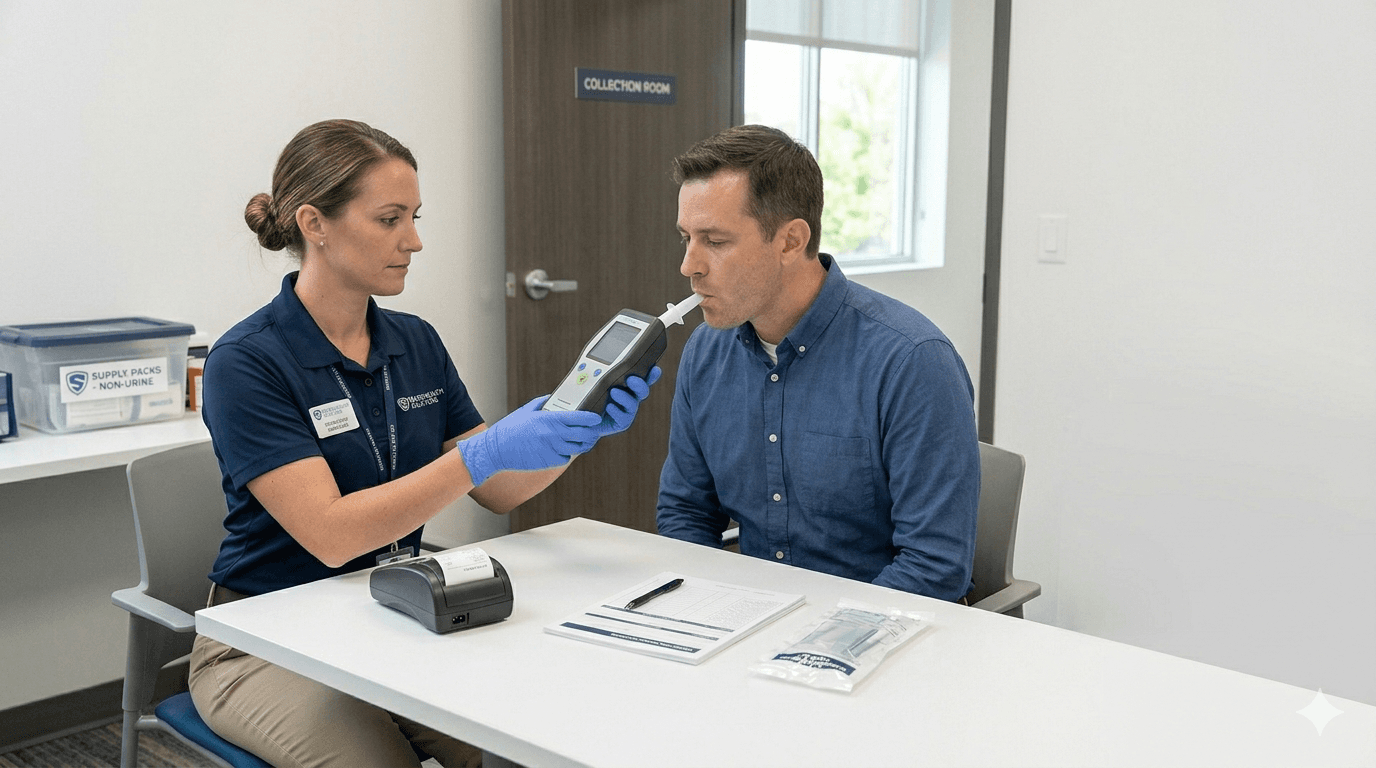
Breath alcohol testing (BAT) measures current alcohol concentration through approved evidential breath devices. Employers use it in DOT Part 40 programs, many Post-accident drug testing workflows, and non-DOT policies that authorize alcohol screens after incidents or referrals.
Because alcohol clears quickly, window management matters. Pair BAT with clear intake—DOT or non-DOT, drug and alcohol together or alcohol only, and whether the donor is still onsite—so dispatch matches the event you are actually running, wherever your workforce is located.
Alcohol testing is often the time-sensitive part
When alcohol testing is part of the order, delay becomes the real problem. Breath alcohol testing is used by employers that need a current-intoxication screening method handled under the right procedure, often on short timelines after an incident or under a regulated DOT program.
Drug testing may follow a different clock and paperwork path. When both are ordered, say so at intake so the whole visit—not just the BAT step—can be planned correctly.
When employers typically order BAT
Employers usually order breath alcohol testing for:
DOT post-accident events
DOT random alcohol testing
Reasonable suspicion alcohol testing
Return-to-duty or follow-up events
Non-DOT policy-driven alcohol screens where authorized
For regulated alcohol testing tied to a crash or qualifying incident, start with Post-accident drug testing intake and confirm whether alcohol, drug, or both are required under your program.
Why mobile BAT matters
A breath alcohol test loses value if the employer spends too long trying to find the right location or equipment. Nationwide mobile BAT helps by reducing travel time and keeping the event under one coordinated employer workflow—whether the site is a metro terminal or a remote yard.
That matters most when:
The clock is already running
The donor is still onsite
Supervisors need a controlled environment
The employer is managing both drug and alcohol testing together
Your workforce spans multiple states or regions
On-site and On-site & mobile drug testing dispatch can meet drivers at terminals, yards, or incident staging points when your program and site access allow.
Nationwide coverage for employer BAT programs
OnSite Employer Testing coordinates mobile and on-site breath alcohol testing for employers across the United States through a distributed network of trained BAT collectors.
Whether you need coverage near a major metro hub or at a remote job site, share the site address, program type, and timing windows at intake so we can confirm collector availability and dispatch logistics for that location.
What employers should confirm before dispatch
The intake should clearly confirm:
DOT or non-DOT
Alcohol only or drug and alcohol
Test reason
Site address and access
Whether the donor is still available
Whether another testing event is tied to the BAT
Collectors execute the sequence on the order. Supervisors should not improvise device steps or mix programs when urgency is high.
DOT and non-DOT differences
BAT is common in both DOT and non-DOT contexts, but the governing procedures are different. DOT alcohol tests follow Part 40 requirements with mandated screening and confirmation steps where applicable.
Non-DOT alcohol tests follow the employer's policy and approved process—device standards, observation rules, and how results interact with discipline or medical review should be defined before collection day.
See DOT drug testing for how regulated drug and alcohol collections fit together, and DOT vs non-DOT drug testing when blended sites need clear separation.
What the employer should expect on site
The employer should provide a low-traffic area, one reachable contact, and clear instructions about where the collector should check in.
Donors should expect identity verification, required waiting periods, and step-by-step instructions from a trained collector. DOT sequences have little room for improvisation; non-DOT programs should still be calm, consistent, and documented.
If the event also includes drug testing, the employer should say that before dispatch so the whole visit can be planned correctly—not as a surprise add-on after the breath device is set up.
Related reading
Frequently asked questions
Is breath alcohol testing the same as a drug test?
No. It is a separate alcohol-testing process with its own devices, waiting periods, and documentation—not a urine or oral-fluid drug screen.
Can BAT and drug testing happen in the same visit?
Often yes, when the order includes both. Confirm sequencing and paperwork for each modality during intake.
Do you provide breath alcohol testing nationwide?
Yes. We coordinate mobile and on-site BAT coverage for employers across the United States. Availability depends on location, timing, and collector credentials for the required program—share your site details at intake so we can confirm dispatch options.
Is PEth the same as BAT?
No. PEth alcohol testing is a different blood-based alcohol marker used for different purposes. It is not a substitute for evidential breath testing when Part 40 or your policy requires BAT. See PEth alcohol testing for when that modality fits.
Request nationwide breath alcohol testing coverage
Share DOT or non-DOT context, test reason, site access, and whether drug testing is part of the same event—we confirm BAT logistics before dispatch anywhere in the U.S. we can cover.