Workplace drug testing
Non-DOT Drug Testing Services
Need a non DOT drug test program for your workplace? We bring non-DOT drug testing services to your facility so employees stay on shift.
Policy-based workplace testing for employers whose teams are not covered by federal DOT rules — with flexible panels and mobile collections nationwide.
A non DOT drug test is employer-directed workplace testing that follows the company's written policy rather than federal DOT testing rules. OnSite Employer Testing coordinates mobile and on-site non-DOT drug testing for hiring, random testing, post-accident situations, reasonable suspicion, and return-to-work needs.
What Is Non-DOT Drug Testing?
Non-DOT drug testing is standard workplace drug testing for employees who aren't covered by federal DOT regulations. Instead of following federal rules, it follows your company's written drug-free workplace policy.
Most businesses use non-DOT testing. If your employees don't drive commercial vehicles, fly planes, operate trains, or work in federally regulated safety-sensitive jobs — they're tested under non-DOT rules. Employers that need DOT-regulated collections can review our DOT drug testing. Compare program types in our DOT vs non-DOT guide.
What's the Difference Between DOT and Non-DOT Testing?
| DOT Testing | Non-DOT Testing | |
|---|---|---|
| Who sets the rules? | Federal government (DOT) | Your company policy |
| Who does it apply to? | CDL drivers, pilots, railroad workers, etc. | All other employees |
| What forms are used? | Federal chain-of-custody forms | Your TPA or standard forms |
| What's on the panel? | Federally mandated 5-panel | You choose (5, 10, 12-panel, etc.) |
| Do you need an MRO? | Yes, required | Recommended but not required |
Who Needs Non-DOT Drug Testing?
Any employer that wants a drug-free workplace policy for workers who are not in DOT-regulated, safety-sensitive roles. Common situations include:
Manufacturing, warehouse, and logistics employers screening new hires and current staff
Corporate offices, professional firms, and healthcare support teams under company policy
Retail, contractors, staffing agencies, and multi-site employers that need consistent collections
Companies that already run DOT testing for drivers but need a separate non-DOT program for other employees
When Do Employers Use Non-DOT Drug Testing?
Pre-employment — Testing job candidates before they start
Random — Unannounced testing throughout the year to deter drug use
Post-accident — After a workplace incident or vehicle accident
Reasonable suspicion — When a supervisor observes signs of impairment
Return-to-duty — After a violation, before an employee comes back
Non-DOT Drug Testing Panels We Offer
Non-DOT programs are flexible. You choose the panel that matches your written policy and risk profile. Common options include:
5-panel — Marijuana, cocaine, opiates, amphetamines, PCP
10-panel — Adds benzodiazepines, barbiturates, methadone, propoxyphene, methaqualone
12-panel — Adds oxycodone and extended opioids
Custom panels — Add fentanyl, MDMA, alcohol, or other analytes with your TPA or lab partner
Specimen options — Urine is most common; oral fluid and other matrices may be available based on your program design
How We Handle Non-DOT Testing
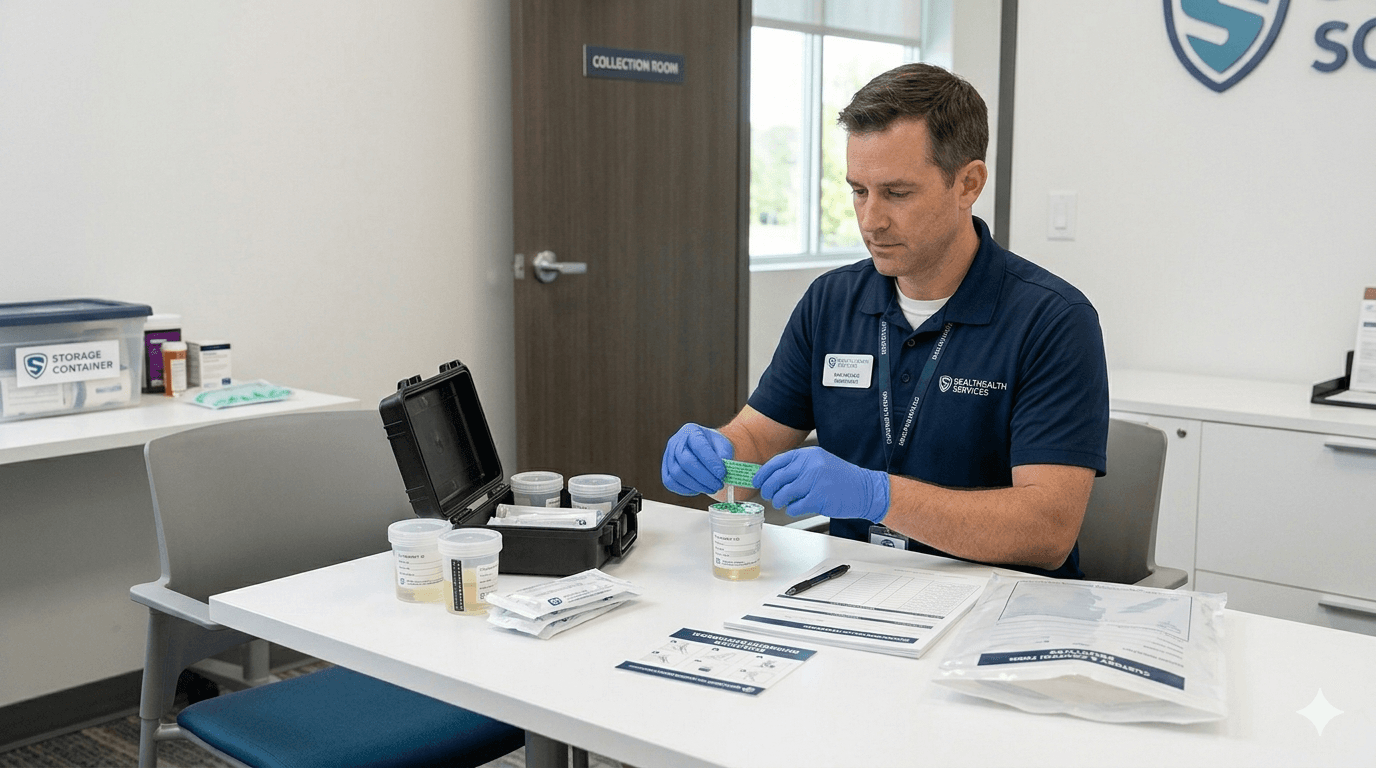
We come to your location — office, warehouse, job site, or any facility
Collections follow your company policy and applicable state law
Paperwork is completed on-site and specimens sent to your designated lab
We stay neutral — we collect and document; HR handles the employment decisions
Non-DOT drug testing FAQ
What is non-DOT drug testing?
Non-DOT drug testing is workplace drug testing directed by your company policy rather than federal Department of Transportation rules. It is used for employees who are not in DOT-regulated safety-sensitive positions. You set the panel, testing reasons, and consequences in your written program, and collections can be completed on-site so the process fits your operations.
Who needs non-DOT drug testing?
Most employers that want a drug-free workplace for non-regulated staff need non-DOT drug testing. That includes manufacturing, warehousing, logistics, retail, offices, healthcare support roles, contractors, and staffing agencies. If some of your workforce is DOT-covered and some is not, you typically run a separate non-DOT program for the non-regulated group.
What is the difference between DOT and non-DOT drug testing?
DOT testing follows federal rules for covered safety-sensitive employees, including mandated panels, federal forms, and required MRO review. Non-DOT testing follows your employer policy: you choose the panel, forms, and testing reasons. Both can be collected on-site; the paperwork, panel, and compliance requirements differ. See our DOT vs non-DOT guide for a side-by-side comparison.
How do I set up a non-DOT drug testing program for my employees?
Start with a written drug-free workplace policy, choose your panel and testing reasons (pre-employment, random, post-accident, reasonable suspicion, return-to-duty), and decide how results will be handled. Then contact OnSite Employer Testing at (219) 315-0345 or request a quote — we will confirm coverage for your sites, schedule mobile collections, and coordinate paperwork with your HR team or TPA.
Start your non-DOT drug testing program
Tell us your sites, panel type, and testing reasons — or call us now and we will confirm a realistic on-site collection plan.