We bring the collector to your job site, warehouse, or office. Your employees stay on the clock. Call (219) 315-0345 or request a quote.
On-site workplace testing
On-Site & Mobile Drug Testing for Employers
Certified collectors come to your workplace, yard, terminal, office, or job site—so employees are not losing half a shift to a clinic trip. On-time collection means clear ETAs and arrivals scheduled around your operations.
Onsite drug testing means a trained collector travels to your workplace, warehouse, yard, or job site instead of requiring employees to travel to a clinic. This reduces downtime, shift disruption, and the risk of no-shows that can occur with clinic-based collection.
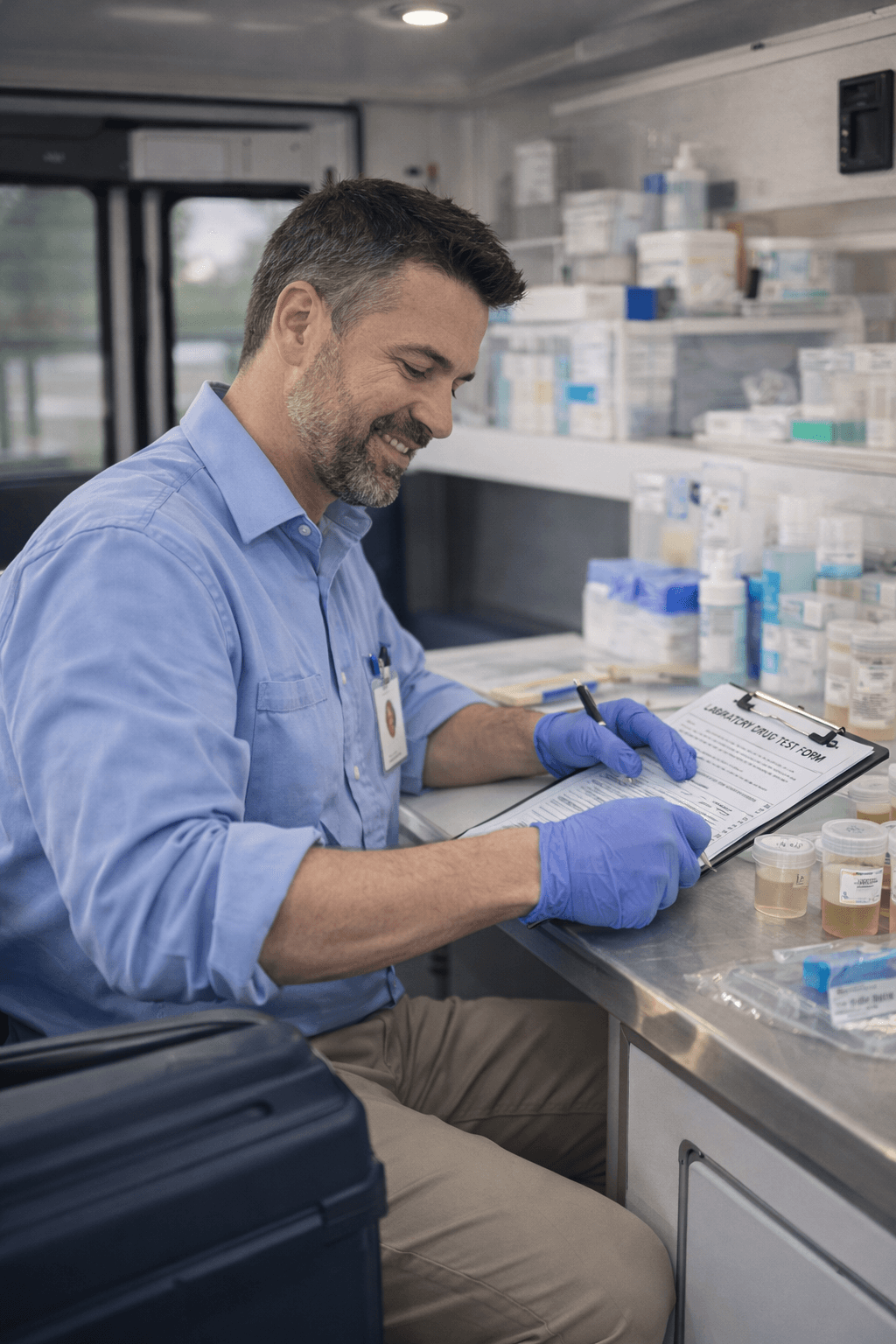
Bring the collection to the worksite
Onsite drug testing solves the same problem for most employers: too much time lost sending people to a clinic. Our on-site testing for businesses brings a certified collector to your workplace, yard, terminal, office, or job site—including Non-DOT drug testing and Random testing programs.
See service areas for coverage and pricing for how employer quotes are structured.
Best fit use cases
This service is especially useful for:
Random testing events
Pre-employment hiring days
Post-accident collections
Reasonable suspicion referrals
Multi-site employer programs
Shift-based operations
Locations where employee travel causes downtime
Urgent incidents often route through post-accident drug testing intake with site access and modality confirmed up front.
Who this page is for
This page is built for:
HR teams
Safety managers
DERs
Operations leaders
TPA and consortium partners
Employers replacing a clinic-only model
What mobile testing includes
A typical onsite event includes:
Collector travel to the site
Collection setup and donor flow
Identity verification
Chain-of-custody handling
Specimen packaging
Event documentation
The exact process depends on the ordered test reason, modality, and program type.
DOT and non-DOT can both use this model
Mobile delivery works for both DOT and non-DOT testing. The important distinction is that the program authority, paperwork, and procedures are different. We do not blur that line. We confirm it before the event begins.
Regulated collections follow DOT drug testing rules; non-DOT collections follow your company policy and state law.
Why employers prefer onsite collections
The operational advantages are straightforward:
Less employee downtime
Cleaner scheduling
Better supervisor visibility
Easier handling of large groups
Fewer clinic-related delays
Stronger control over the event
What employers should prepare
Before scheduling, the employer should provide:
Site address
Number of donors
DOT or non-DOT status
Test reason
Alcohol-testing needs
Access instructions
Space and restroom details where required
Frequently asked questions
What is on-site drug testing?
On-site drug testing is when a trained collector comes to your workplace, yard, terminal, office, or job site to collect specimens—instead of sending employees to a clinic. The custody standards match a fixed collection site when the event is staffed and documented correctly.
How does onsite drug testing work for employers?
You share the site address, donor count, DOT or non-DOT status, test reason, and access details. We schedule a collector, set up a secure collection flow on site, verify identity, complete chain-of-custody paperwork, and package specimens for lab or TPA routing. Employees stay at work instead of traveling to a clinic.
What types of on-site drug testing do you offer?
How quickly can you come to our facility for drug testing?
Timing depends on location, staffing, and modality. Routine events are scheduled around your operations; urgent post-accident and reasonable-suspicion collections are prioritized when we confirm availability. Call (219) 315-0345 for a realistic ETA for your site.
Is mobile testing as defensible as clinic testing?
Yes, when the collection is performed correctly and documented properly.
Can you support multi-site employers?
Yes. Share each address, donor counts, and program type during intake so we staff and route collections correctly across service areas.
Request an on-site testing quote
Share your location, test type, and employee count—we confirm availability and walk you through the first step.