We come to your jobsite, trailer, or laydown yard
Mobile Drug Testing for Construction Employers and Job Sites
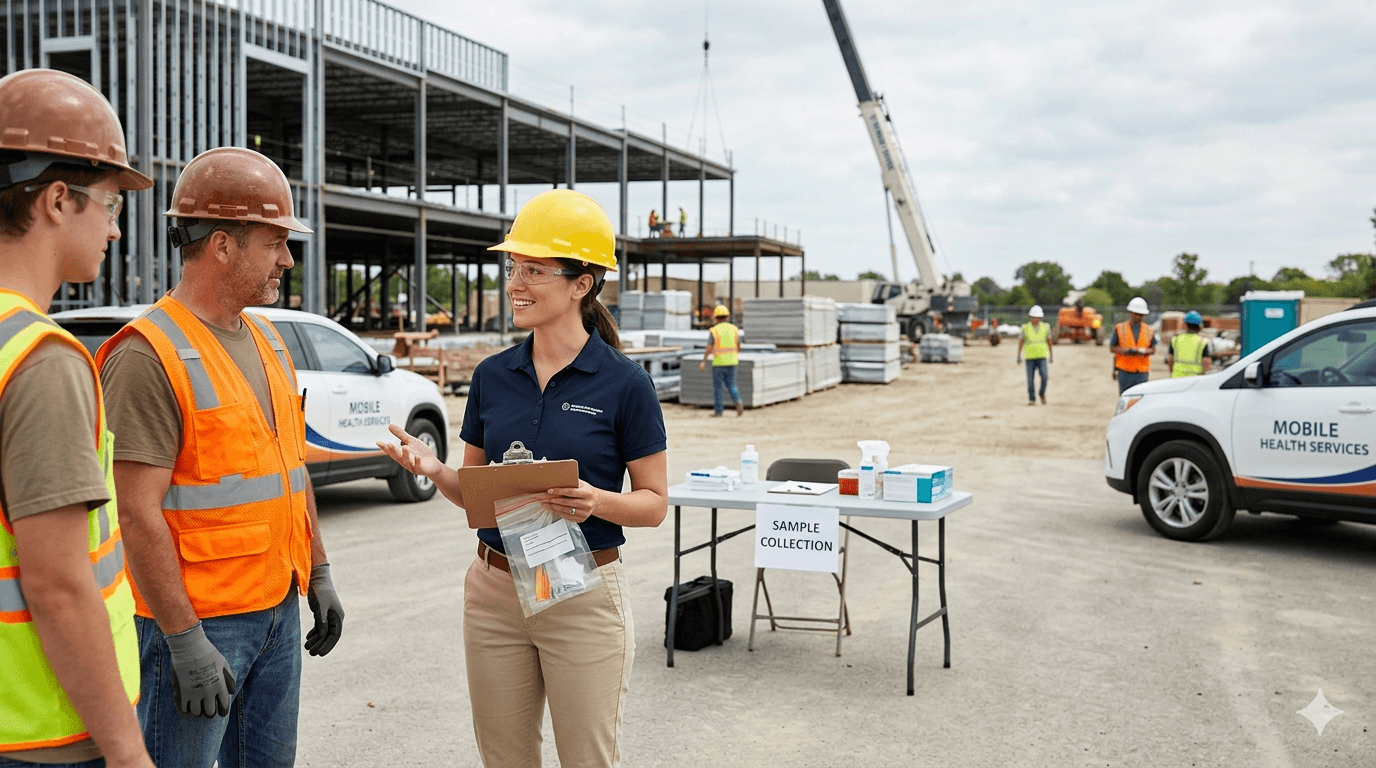
Need drug testing on an active job site? We come to your jobsite trailer, staging area, GC office, laydown yard, or approved work location when available. Post-accident, random, reasonable suspicion, or pre-employment testing can be coordinated on-site so your crew does not have to leave the project longer than necessary.
Keep crews closer to the jobsite with mobile collection support for pre-employment, random, post-accident, reasonable suspicion, and project-driven testing needs when available.
Jobsite testing has to work in the real world
Construction employers do not need a clinic model designed for office staff. They need collections that fit active jobsites, multi-employer environments, and strict schedule pressure. We provide onsite and mobile drug and alcohol testing for construction employers that need collections completed without pulling key workers off the project longer than necessary.
Where construction programs get difficult
Construction testing becomes harder when:
crews are spread across multiple sites
one project has both DOT and non-DOT employees
access is controlled by a GC or owner
post-incident response has to happen quickly
high-volume hiring creates bursts of pre-employment testing
A workable program does not eliminate those realities. It plans around them.
Common testing events on construction projects
Pre-employment and onboarding
New phases, staffing surges, and subcontractor onboarding often create a large number of screens in a short period.
Random testing
Random programs work best when collections are batched around shift timing and gate access instead of pushing workers to scattered clinics.
Post-accident and reasonable suspicion
These events need calm field execution, privacy, and a direct communication line between site leadership and the collector. See post-accident and reasonable suspicion testing for incident-driven workflows.
Why contractors use onsite collections
Onsite testing gives contractors and GCs better control over:
donor flow
supervisor oversight
privacy staging
time away from production
chain-of-custody consistency across multiple projects
It also reduces the wasted hours that come from sending a foreman, operator, or craft worker across town in the middle of an active day.
Mixed workforces need clear routing
Construction employers often have a mix of CDL drivers, equipment transport roles, craft labor, office staff, and subcontractor personnel. That means one site can include both DOT and non-DOT testing paths at the same time.
The safest approach is to identify program type before the collector arrives. Do not sort it out at the trailer door. Compare DOT and non-DOT testing paths before collection day.
What a construction site should have ready
Before the event, confirm:
employer authority for each donor
whether the order is DOT or non-DOT
test reason
restroom and privacy access
site PPE rules
the single on-site contact for the collector
Best fit employers
This page is written for:
general contractors
heavy civil contractors
specialty trades
industrial contractors
staffing firms serving construction employers
For incident timing and policy thresholds, review construction resources on post-accident employer testing.
Request a job site testing quote
Share your site location, headcount, and program type—we'll confirm staging and collection logistics.