We come to your crew base, hangar, or airport operation
On-Site Drug & Alcohol Testing for Aviation and Airline Employers
Support FAA/DOT and employer-directed testing needs without pulling safety-sensitive aviation employees away from gates, crew bases, hangars, dispatch centers, or shift-critical airport operations longer than necessary.
Airlines and aviation employers operate under some of the strictest federal drug and alcohol testing requirements in any industry. FAA regulations under 14 CFR Part 120 — alongside DOT procedures in 49 CFR Part 40 — require testing programs that cover safety-sensitive employees across flight operations, maintenance, dispatch, and ground security. The challenge is that aviation workforces do not operate on a standard office schedule. Crew bases run around the clock. Pilots rotate through hubs on irregular patterns. Mechanics work overnight shifts. Dispatchers cover 24-hour operations. Standard clinic-based testing creates friction that on-site and mobile collections can reduce.
All industriesEmployer services overviewResources & articlesRequest a quote
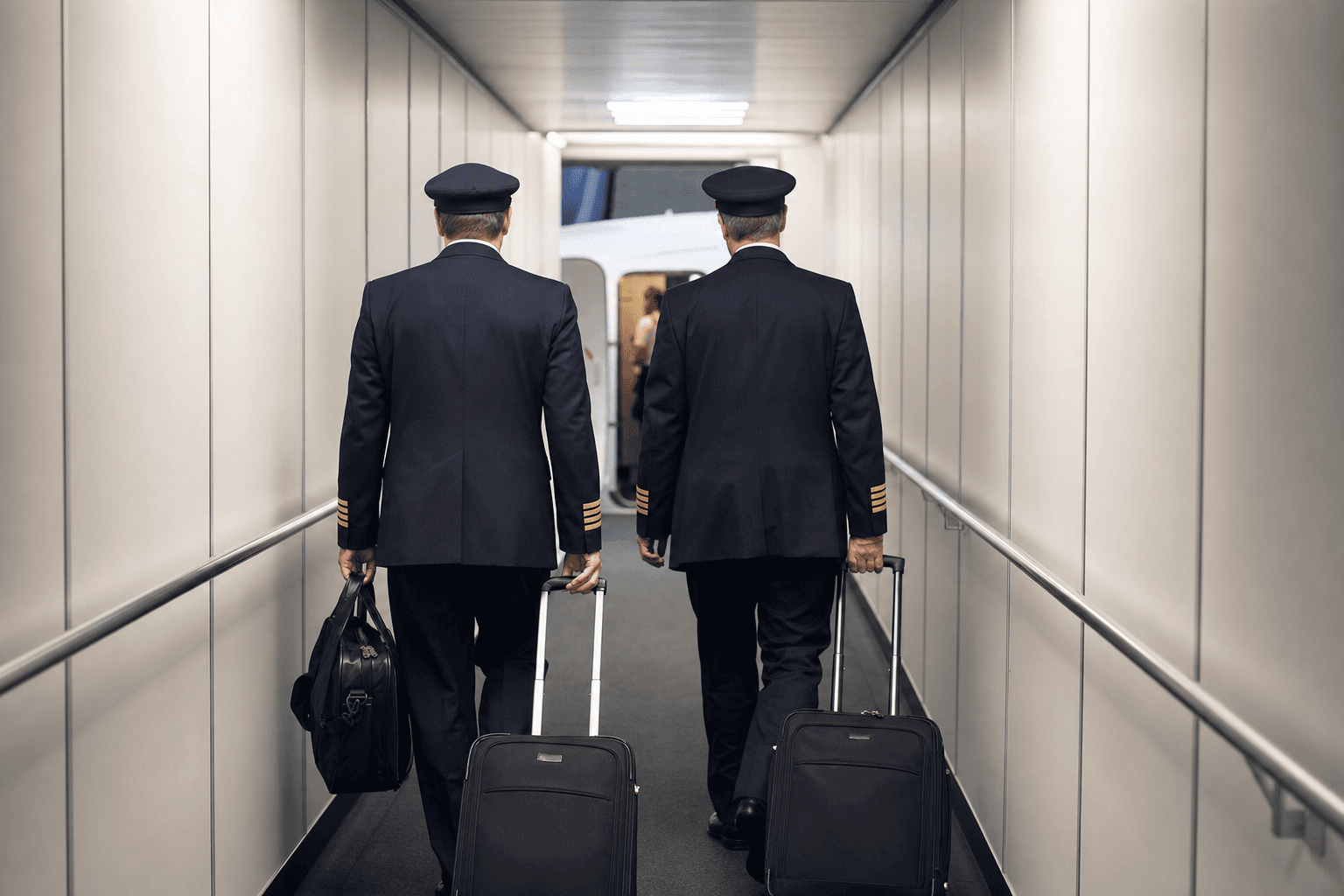
Who is covered under FAA Part 120
FAA regulations require drug and alcohol testing for employees performing safety-sensitive functions. This includes:
Flight crewmembers (pilots and co-pilots)
Flight attendants
Aircraft mechanics and maintenance personnel
Aircraft dispatchers
Ground security coordinators
Air traffic controllers at non-FAA facilities
Aviation screeners
Operations control specialists
Coverage extends to contract and subcontracted employees performing these functions — not only direct hires. Employers are responsible for ensuring all covered individuals are included in a compliant testing program regardless of employment classification.
Testing types required under FAA regulations
Aviation employers must maintain programs that include all federally required testing reasons. For drug testing:
Pre-employment — required before any safety-sensitive function begins
Random — unannounced selections at the FAA-published annual rate (currently 25% for drugs)
Post-accident — required within defined windows following qualifying incidents
Reasonable suspicion — triggered by documented supervisor observations
Return-to-duty — required after a violation before resuming safety-sensitive work
Follow-up — ongoing testing after return-to-duty as directed by a Substance Abuse Professional
For alcohol testing, required reasons include post-accident, reasonable suspicion, random (currently 10% annual rate), return-to-duty, and follow-up. Pre-employment alcohol testing is not federally required but may be included under a company policy.
On-site and mobile collections for aviation operations
Aviation workforces present logistics challenges that fixed-location clinics handle poorly. Crew bases, hangars, operations centers, and airport facilities often operate outside standard business hours and cannot pause operations to send employees to off-site clinics during shift-critical windows.
On-site and mobile collections address this by bringing the testing to where your people already are — the crew base, the maintenance hangar, the operations center, or a designated staging area at or near the airport. Collections are scheduled around your gates, shift rotations, and dispatch windows rather than around clinic hours.
We support aviation employers at crew bases, hangars, maintenance facilities, airport operations centers, and approved staging locations when available. In the Chicago region, this may include employers operating at or near O'Hare International Airport (ORD) and Chicago Midway International Airport (MDW). Coverage depends on location, access, timing, test type, and program requirements. For locations where on-site access requires coordination with airport operations or ground transportation, we work with your site contact ahead of the visit to confirm access, staging, and donor flow before collection day.
HIMS monitoring and specialized aviation testing
Pilots enrolled in FAA HIMS (Human Intervention Motivational Study) monitoring programs require ongoing abstinence and compliance testing that is separate from standard DOT random testing. HIMS monitoring commonly includes:
PEth (phosphatidylethanol) blood testing — a biomarker for alcohol exposure used in later HIMS monitoring phases
Urine EtG testing for alcohol abstinence monitoring in earlier phases
Expanded drug panels beyond the standard DOT five-panel screen
HIMS testing is ordered by the pilot's HIMS AME (Aviation Medical Examiner) or Independent Medical Sponsor — not by the employer's random program. Results route to the HIMS AME and FAA medical certification pathway, not to the employer's DOT compliance program. These are two distinct tracks and we handle documentation for each accordingly.
We may support commercial pilots and aviation professionals with HIMS-related testing coordination where available, depending on location, specimen routing, documentation requirements, and scheduling. Pilots and HIMS AMEs can contact us directly to coordinate scheduling, specimen routing, and chain of custody documentation.
What to have ready before collection day
Aviation employers and DERs should confirm the following before scheduling on-site or mobile collections:
Program authorization — your FAA-issued A449, A049, or registration number confirming your drug and alcohol testing program is properly registered
Employee roster — which employees are safety-sensitive and covered under FAA Part 120 versus any non-DOT handbook program
TPA or consortium details — lab account information, chain of custody form instructions, and result routing contacts
Site access — crew base or facility address, any airport or security access requirements, and a site contact for day-of coordination
Alcohol testing scope — confirm whether breath alcohol is included in the visit order so the right collector and equipment are dispatched
Test reason — pre-employment, random selection, post-accident, reasonable suspicion, return-to-duty, or follow-up so the correct federal forms and procedures are used
Common testing programs we support for aviation employers
Random pool management and on-site random batch collections for FAA-covered employees
Pre-employment DOT drug testing before safety-sensitive functions begin
Post-accident collections at or near the facility following qualifying incidents
Reasonable suspicion testing when supervisors have documented observations
Return-to-duty and follow-up testing after DOT violations
HIMS monitoring testing for pilots — PEth, BAT, and expanded panels
On-site collections at crew bases, maintenance hangars, and operations centers near ORD and MDW
Request coverage for your aviation operation
Tell us your program type, employee categories, site addresses, and how soon people need to be seen. We confirm what is realistic for your locations and schedule before you commit to internal timelines.