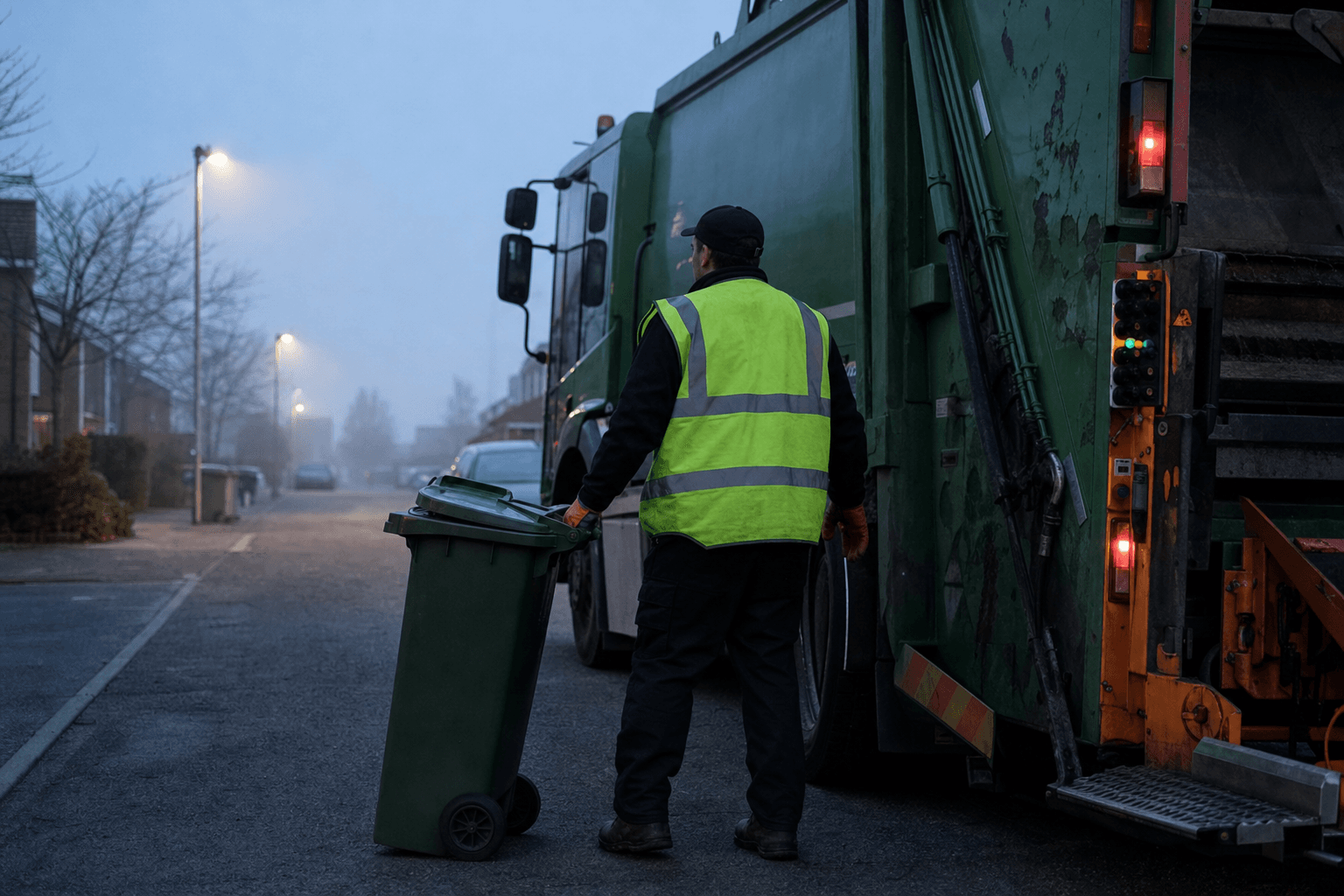
We come before routes leave the yard
FMCSA DOT COMPLIANTEARLY MORNING DISPATCHWE COME TO YOUR YARD
On-Site DOT Drug & Alcohol Testing for Waste and Sanitation Fleets
Help reduce route disruption by coordinating DOT and non-DOT collections for refuse haulers, sanitation fleets, and solid waste teams around early-morning dispatch, post-accident needs, and random testing events.
Why Waste Fleets Need On-Site Drug Testing
Commercial refuse trucks over 26,001 lbs are regulated by the Federal Motor Carrier Safety Administration (FMCSA) under 49 CFR Part 40 and Part 382. Every CDL driver operating a commercial waste vehicle is subject to a mandatory DOT drug and alcohol testing program — pre-employment, random, post-accident, reasonable suspicion, return-to-duty, and follow-up testing.
The problem waste and sanitation fleet managers face is timing. Routes start at 4am, 5am, and 6am. Your drivers are at the yard before any clinic in your area opens. A post-accident test that needs to happen within two hours of an incident cannot wait until 8am. Random selections that need to be completed before a driver leaves the facility require a collector on-site, not a 15-minute drive to a lab.
We solve that problem. We dispatch certified collectors to your yard, garage, or transfer station — early morning, before routes leave, or whenever your program requires.
Testing Programs for Refuse & Hauling Fleets
Every test type your FMCSA program requires — collected at your location, not a clinic.
DOT Random Drug Testing
FMCSA requires a minimum 50% random drug testing rate and 10% random alcohol testing rate annually for CDL drivers. We coordinate your random pool, manage selections, and dispatch collectors to your yard for same-day collection — no clinic scheduling, no driver travel time, no missed selections.
Post-Accident Drug & Alcohol Testing
FMCSA post-accident testing must happen fast. Urine drug testing within 32 hours and breath alcohol testing within 8 hours of a qualifying accident. We dispatch immediately on post-accident calls — early morning, evenings, and after standard business hours when incidents actually happen on route.
Reasonable Suspicion Testing
When a trained supervisor observes signs of drug or alcohol use in a CDL driver, testing must happen before that driver operates a commercial vehicle. We coordinate rapid dispatch for reasonable suspicion collections so your supervisor's documented observation leads directly to a legally defensible test — not a delay that creates liability.
Pre-Employment DOT Drug Testing
Every new CDL hire must pass a DOT pre-employment drug test before operating a commercial waste vehicle. High turnover in refuse and sanitation means frequent pre-employment testing — seasonal hires, replacement drivers, temporary CDL staff. We handle volume pre-employment collections at your yard so your HR team is not managing clinic logistics for every new hire.
Early Morning Dispatch — Before Routes Leave
Waste collection is one of the few industries where the workday starts before most businesses open. Your drivers clock in at 4am and 5am. Your yard is active before sunrise. Standard drug testing clinics are not open until 8am or later — which means by the time a clinic opens, your entire fleet has already left for routes.
This is why on-site collection is not just convenient for waste fleets — it is the only approach that works operationally.
We coordinate early morning dispatch for:
Pre-route random selections before drivers leave the yard
Post-accident response when incidents happen on morning routes
Return-to-duty testing that must happen before a driver can operate a vehicle again
Reasonable suspicion testing when a supervisor observes a problem at 5am and a clinic does not open for three hours
Call us before your program needs an early morning test — not after.
FMCSA Compliance for Solid Waste & Recycling
Under 49 CFR Part 382, any employer of CDL drivers operating commercial motor vehicles in interstate or intrastate commerce must maintain a DOT-compliant drug and alcohol testing program. For waste collection companies this includes:
Refuse haulers operating rear-load, front-load, and roll-off trucks over 26,001 lbs GVWR
Recycling collection fleets with CDL drivers
Transfer station operators with CDL-licensed equipment operators
Municipal solid waste (MSW) program drivers employed by cities, counties, or contracted municipal operators
Construction and demolition debris (C&D) haulers with CDL drivers
Organic waste and composting fleet operators
Hazardous waste transporters under PHMSA in addition to FMCSA
Non-CDL sanitation and waste workers — ground crew, sorters, transfer station laborers — are not subject to FMCSA DOT requirements but may be covered under your company's non-DOT workplace drug policy. We handle both DOT and non-DOT collections under the same dispatch so you are not managing two separate testing vendors.
What Waste Fleet Managers Call Us About
The typical first call from a waste or sanitation fleet manager is one of these four situations:
A Driver Was Just in an Accident on Route
Post-accident DOT testing has a hard clock. Breath alcohol within 8 hours. Urine drug test within 32 hours. If either window closes without a test, you must document why — and that documentation becomes part of your compliance record. Call us immediately after a qualifying accident. We confirm response time for your location before you commit.
Random Selection Due and Drivers Are at Yard
Random selections should happen before drivers leave for routes — not after. If you pull a selection and your drivers are already gone, you have a compliance gap. We coordinate early morning dispatch so selected drivers are tested at the yard before departure, with paperwork completed and chain of custody documented.
New CDL Hires Starting This Week
Pre-employment DOT drug testing must be completed and a negative result received before a new CDL driver can operate a commercial waste vehicle. High turnover and seasonal hiring means this is a recurring need, not a one-time event. We handle volume pre-employment collections at your facility so you are not sending every new hire to a clinic individually.
Building a DOT Program From the Ground Up
Smaller waste haulers and independent refuse operators often reach a fleet size that triggers FMCSA compliance requirements without having a formal drug testing program in place. We help you understand what your program needs — random pool enrollment, testing rates, policy documentation, and collection coordination — and we handle the collection side of your program from day one.
FMCSA Regulations for Waste Fleet Drug Testing
DOT drug and alcohol testing for commercial waste fleets is governed by federal regulation. The primary rules that apply:
- 49 CFR Part 382 — FMCSA Drug and Alcohol Testing Requirements
- 49 CFR Part 40 — DOT Drug and Alcohol Testing Procedures
- FMCSA Drug & Alcohol Clearinghouse
- FMCSA CDL Driver Requirements Overview
Regulatory requirements are subject to change. Verify current requirements with FMCSA or your designated employer representative.
Waste Fleet Drug Testing — Common Questions
Are garbage truck drivers required to have DOT drug testing?
Yes. CDL drivers operating commercial refuse trucks over 26,001 lbs GVWR are subject to FMCSA drug and alcohol testing requirements under 49 CFR Part 382. This includes pre-employment, random, post-accident, reasonable suspicion, return-to-duty, and follow-up testing. Non-CDL sanitation workers may be covered under a non-DOT company policy.
Can you do drug testing before our routes leave at 5am?
Yes — early morning dispatch is one of the primary reasons waste fleets use us instead of a clinic. We coordinate pre-route random testing and post-accident response before standard business hours. Call us to confirm early morning availability for your location.
What happens if we miss the post-accident testing window?
Under FMCSA rules, if breath alcohol testing is not completed within 8 hours of a qualifying accident, you must document why and retain that documentation. The same applies to urine drug testing within 32 hours. Missing the window creates a compliance gap in your record. Call us immediately after a qualifying accident — do not wait until morning.
Do you test non-CDL sanitation workers too?
Yes. Non-CDL workers — ground crew, loaders, sorters, transfer station workers — are not subject to FMCSA DOT requirements but can be tested under your company's non-DOT workplace drug policy. We handle both DOT and non-DOT collections under the same dispatch.
What is the FMCSA random drug testing rate for waste fleets?
For 2024–2025, FMCSA requires a minimum random drug testing rate of 50% of your average CDL driver count annually, and a 10% random alcohol testing rate. These rates are set annually by FMCSA and can change. We coordinate random pool management and selection scheduling as part of your program.
Can you handle drug testing for a municipal waste contract?
Yes. We work with both private haulers and municipally contracted solid waste operators. If your contract requires documented DOT compliance for CDL drivers, we provide the collection coordination and paperwork your program requires.
Request Drug Testing for Your Waste Fleet
Tell us your fleet size, location, and what your program needs — random testing, post-accident response, pre-employment, or building a program from scratch. We confirm coverage and early morning availability before you commit to anything.